Introduction
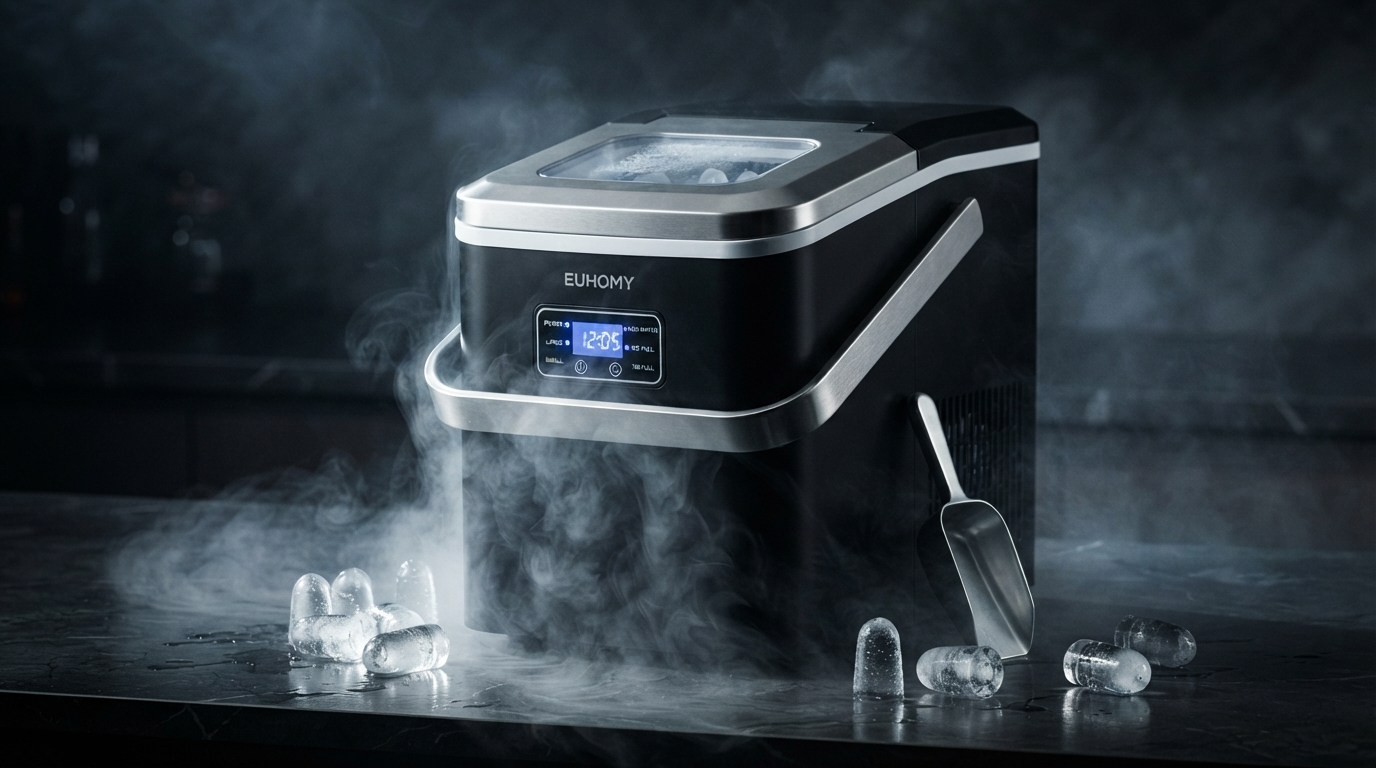
There’s a particular kind of inconvenience that comes from running out of ice mid-gathering, or realizing your freezer’s built-in ice maker just isn’t keeping pace with how much your household actually uses. Countertop ice makers were designed to solve exactly that problem, offering a standalone appliance that produces ice on demand without relying on a plumbed-in freezer unit. The EUHOMY Countertop Ice Maker is one example of this category, built around a stated output of up to 26 pounds of ice within a 24-hour period, with individual batches of nine ice cubes ready in roughly six minutes, along with auto-cleaning functionality, a handle for portability, and an included basket and scoop.
This article breaks down what a portable countertop ice maker like this one generally does, how it tends to be used across different settings, the kinds of households or situations that benefit most from having one, and the practical factors worth thinking through before adding one to your kitchen or travel setup. As with any appliance, the goal here is to give you clear, balanced information rather than a sales pitch, so you can decide for yourself whether this type of device is worth considering.
Key Features
Countertop ice makers like this one are generally defined by a handful of core characteristics, each worth understanding on its own.
Rapid Ice Production Cycle One of the more commonly advertised features of countertop ice makers is their relatively fast production cycle, with this model generally producing a batch of nine ice cubes in around six minutes. This stands in contrast to traditional freezer ice trays, which typically take several hours to freeze a single batch, making countertop units considerably faster for on-demand ice needs.
Daily Output Capacity Beyond individual batch speed, the unit is designed to produce up to 26 pounds of ice within a 24-hour period, assuming continuous operation and regular emptying of the storage basket, which gives a general sense of how much ice the machine can realistically supply over the course of a day for entertaining, daily use, or other higher-demand situations.
Auto-Cleaning Function An auto-cleaning feature is included, generally intended to reduce the manual maintenance required to keep the internal components free of mineral buildup or residue, which can otherwise accumulate over time with regular use, particularly depending on local water hardness.
Portable Design with Handle Unlike built-in ice makers, this unit is designed to be moved relatively easily from one location to another, aided by an integrated handle. This portability is a defining feature of the countertop category as a whole, distinguishing it from permanently installed ice-making systems.
Included Basket and Scoop The unit comes with a basket for storing finished ice and a scoop for retrieval, which together make the ice maker more self-contained and ready to use without needing to source separate accessories.
Compact, Standalone Format Rather than requiring a dedicated water line or built-in installation, this type of appliance is generally filled manually with water and operates as a self-contained countertop unit, which is part of what makes it suitable for locations without existing plumbing infrastructure.
How It Can Be Used
Because it doesn’t require a permanent installation, a countertop ice maker like this one tends to be used across a fairly wide variety of settings and occasions.
Everyday kitchen use is one of the most straightforward applications, particularly for households whose refrigerator either lacks a built-in ice maker or doesn’t produce ice quickly enough to keep up with regular demand, such as during hot weather or when entertaining guests.
Entertaining and gatherings are a common use case as well, since the combination of fast batch production and a meaningful daily output makes it easier to keep a steady supply of ice on hand for parties, cookouts, or other events where drink service is ongoing throughout the day.
Camping and outdoor trips are another frequently cited use, given the unit’s portability and independence from a fixed water line. As long as a power source and a water supply are available, it can be used in settings like a campsite, cabin, or other temporary outdoor setup.
RV and mobile living situations benefit from similar portability advantages, since RV refrigerators often have limited or no dedicated ice-making capability, making a standalone countertop unit a practical addition for road trips or extended travel.
Home bars and beverage stations are a more specific use case, particularly for households that regularly prepare cocktails or cold beverages and want a more convenient, faster-replenishing ice source than what a standard freezer tray provides.
Secondary or supplemental ice production is another way these units get used, even in kitchens that already have a built-in ice maker, particularly when that primary source isn’t sufficient during high-demand periods, such as holidays or larger gatherings.
Who It May Be Suitable For
Given its portability and moderate daily output, this type of countertop ice maker tends to appeal to a fairly specific range of households and situations.
Households without a built-in freezer ice maker are perhaps the most direct fit, since a countertop unit offers a practical alternative without requiring a kitchen renovation or a new refrigerator purchase.
Frequent hosts and entertainers who regularly need larger, faster-replenishing quantities of ice for guests may find the combination of quick batch cycles and meaningful daily capacity particularly useful compared to relying solely on a standard freezer tray.
Campers, RV owners, and those with mobile or temporary living setups are a natural fit given the unit’s portable, standalone design, which doesn’t depend on a fixed plumbing connection.
Home bartenders or those who frequently prepare cold drinks may appreciate having a dedicated, faster ice source rather than depleting a shared household ice supply throughout the evening.
People in smaller living spaces, such as apartments or vacation homes, where a full-sized refrigerator with a built-in ice maker isn’t present or practical, may find a countertop unit a reasonable way to have consistent access to ice without additional plumbing work.
On the other hand, households with minimal ice needs, or those who already have a reliable, sufficiently fast built-in ice maker, may find a separate countertop unit to be more capacity and appliance space than they actually require day to day.
Important Things to Consider
There are several practical details worth thinking through before deciding whether a countertop ice maker fits your needs.
Ice shape and melting behavior. Ice produced by countertop machines like this one is often described as “bullet” or “nugget” shaped rather than the traditional cube shape produced by trays or built-in freezer ice makers. This shape tends to melt somewhat faster than denser ice cube shapes, which is worth factoring in depending on your intended use, particularly for drinks meant to be enjoyed over a longer period.
Manual water filling requirement. Since this type of unit typically isn’t connected to a dedicated water line, it generally needs to be filled manually with water for each cycle or refill, which adds a small amount of ongoing maintenance compared to a plumbed-in system.
Ice storage isn’t long-term. The included basket is generally designed for short-term storage rather than long-term freezing, meaning ice produced but not used relatively soon may begin to melt and needs to be either used, transferred to a freezer, or allowed to recirculate back into the water reservoir, depending on the specific machine’s design.
Regular cleaning is still recommended. While an auto-cleaning function can help reduce some maintenance, periodic manual cleaning is still generally advisable to prevent mineral buildup or residue, particularly in areas with harder water, to help maintain consistent ice production quality over time.
Noise and placement considerations. Like most compressor-based or thermoelectric appliances, countertop ice makers generate some operational noise and require adequate ventilation around the unit, which is worth factoring into where you plan to place it, especially in smaller kitchens or shared living spaces.
Power source requirements. Since these units are electric, portability to locations like campsites or RVs still depends on having access to a compatible power source, whether that’s a standard outlet, generator, or another power supply appropriate for the appliance’s specifications.
Daily output is based on continuous operation. The advertised 26-pound daily capacity generally assumes the unit is run continuously and emptied regularly, so real-world output may vary depending on how often the machine is used, how frequently ice is removed, and ambient conditions like room temperature and water temperature.
Comparison of General Categories
Rather than comparing this specific model to other individual brands, it’s often more useful to look at how countertop ice makers compare as a category to other common ways of producing ice at home.
Countertop ice makers versus built-in freezer ice makers. Built-in ice makers are generally integrated into a refrigerator and connected to a dedicated water line, offering a more automated, hands-off experience over the long term. However, they typically produce ice more slowly and in smaller daily quantities than a dedicated countertop unit, and they aren’t portable, making countertop units a better fit for higher-demand situations or locations without existing plumbing.
Countertop ice makers versus traditional ice cube trays. Ice cube trays are inexpensive, simple, and require no electricity, but they typically take several hours to freeze a single batch and require manual refilling and freezer space. Countertop ice makers trade that simplicity for significantly faster production and higher daily output, at the cost of needing a dedicated appliance and power source.
Countertop ice makers versus purchasing bagged ice. Buying ice from a store offers convenience without needing any appliance at all, but requires regular trips and ongoing cost over time, along with the practical issue of freezer or cooler space for storage. A countertop ice maker involves an upfront appliance investment but can reduce the need for repeated ice purchases, particularly for households or situations with frequent or high ice demand.
Portable ice makers versus larger, standalone ice machines. Larger commercial or semi-commercial ice machines typically offer substantially higher daily output and are often plumbed in for continuous operation, making them more suitable for businesses or very high-demand household situations. Portable countertop units, by contrast, prioritize compactness and mobility, generally offering a middle-ground output level suited to typical home, camping, or small-gathering use rather than continuous heavy-duty demand.
Frequently Asked Questions
How long does it take for a countertop ice maker to produce its first batch of ice after being filled? This varies by model, but production of an initial batch generally takes several minutes once the unit has been filled with water and powered on, with this particular model generally cited around six minutes for a batch of nine ice cubes.
Does the ice produced by this type of machine taste different from ice made in a freezer tray? Ice quality and taste are generally more affected by the water source used than by the specific appliance, so using filtered or clean water typically produces similar results to what you’d get using the same water in a standard freezer tray.
Can a countertop ice maker be used outdoors, such as at a campsite? Yes, as long as a suitable power source and clean water supply are available, portable countertop ice makers are commonly used in outdoor settings like campsites, provided the unit is protected from weather exposure and used according to manufacturer guidelines.
Do I need to connect this type of ice maker to a water line? No, most countertop ice makers, including this type, are designed to be filled manually with water rather than requiring a dedicated plumbing connection, which is part of what makes them portable and suitable for locations without existing water lines.
How often does the ice basket need to be emptied? Since the storage basket in a countertop ice maker generally isn’t designed for long-term freezing, ice is typically removed and used or transferred to a freezer relatively soon after production, rather than being left to accumulate for extended periods.
Is the auto-cleaning function a substitute for regular manual cleaning? Auto-cleaning functions generally help reduce some routine maintenance, but periodic manual cleaning is often still recommended, particularly in areas with hard water, to help prevent mineral buildup and maintain consistent ice production quality over time.
Will the machine produce the full 26 pounds of ice every single day regardless of use? The stated daily output generally reflects continuous operation under typical conditions, so actual daily production can vary based on factors like how often the unit is run, how frequently ice is removed from the basket, and the ambient temperature of the room and water being used.
Conclusion
The EUHOMY Countertop Ice Maker reflects a broader category of standalone, portable appliances designed to solve a fairly specific but common household problem: producing a reliable, faster supply of ice without depending on a built-in freezer ice maker or requiring a dedicated plumbing connection. Its combination of a quick production cycle, meaningful daily output, auto-cleaning functionality, and portable design makes it relevant to a range of situations, from everyday kitchen use and entertaining to camping trips and RV travel.
Whether this type of appliance is worth adding to your kitchen or travel setup depends largely on how much ice your household typically needs, whether your existing ice source is keeping up with that demand, and how much you’d value the flexibility of a portable, standalone unit over a built-in system. Weighing these practical factors against your own routine is generally the most useful way to determine if a countertop ice maker like this one fits your needs.