Introduction
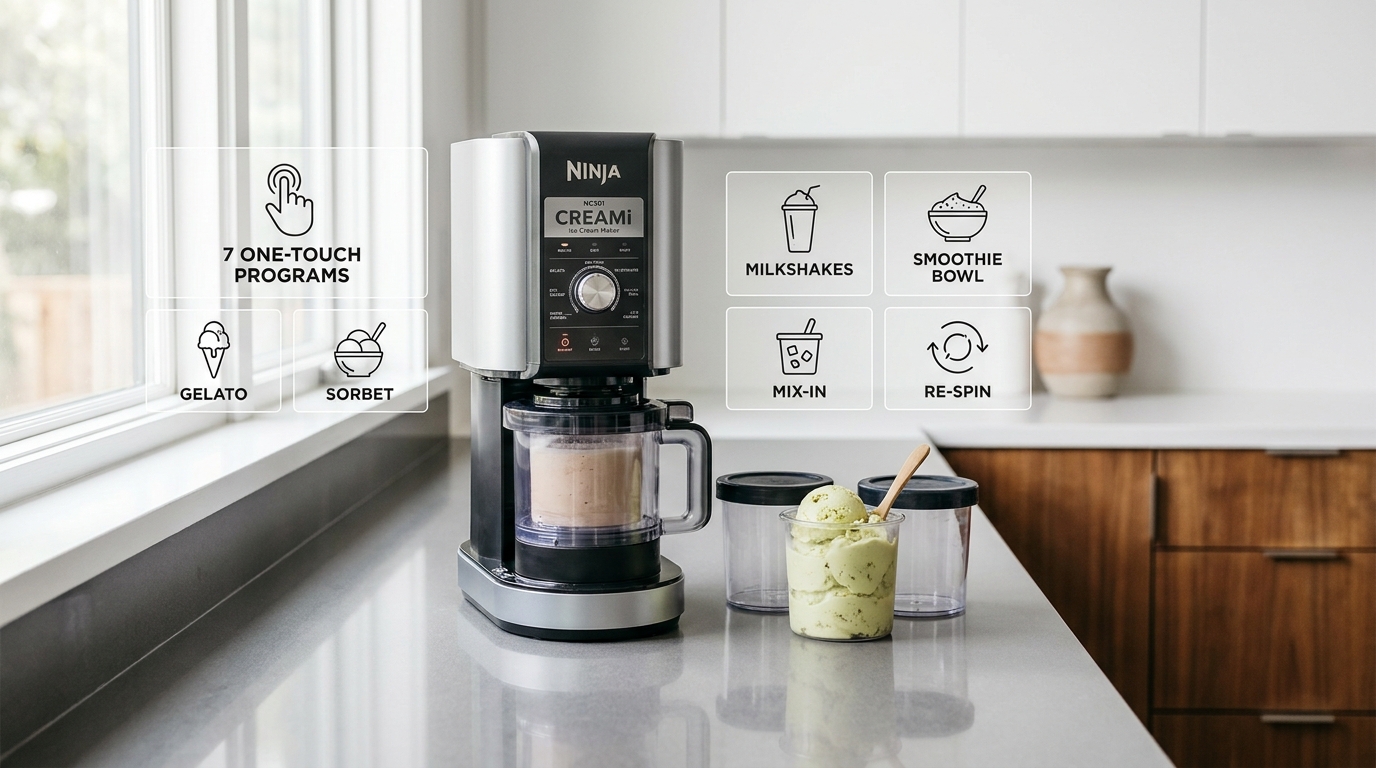
Making frozen desserts at home has traditionally involved a trade-off: either invest in a fairly bulky ice cream maker with a churning bowl that needs to be frozen in advance, or settle for whatever’s available at the store. The Ninja CREAMi NC301 approaches the process differently, built around a system that freezes a base mixture solid first, then processes it using specialized blades and one-touch programs to produce a range of frozen treats, including gelato, milkshakes, sorbet, and smoothie bowls, along with the ability to mix in additional ingredients after the initial processing. The unit comes with seven pre-set programs, two pint containers with lids, and is designed with a relatively compact footprint.
This article explains how this type of appliance generally works, the different programs and outputs it’s designed to produce, who tends to get the most out of owning one, and some practical details worth thinking through before adding it to your kitchen. As always, the aim here is to inform rather than persuade, so you can decide for yourself whether it’s a good match for how you cook and eat.
Key Features
The Ninja CREAMi NC301 is built around a distinct process compared to traditional ice cream makers, and its key features reflect that difference.
Freeze-First, Process-Second Method Unlike traditional churn-style ice cream makers that freeze a mixture while simultaneously incorporating air through constant motion, this appliance is generally designed around freezing a prepared base completely solid in the included pint container first, then processing that frozen block using a specialized blade system to achieve a smooth, creamy texture.
Seven One-Touch Programs The unit includes seven pre-set programs, each generally calibrated for a specific type of frozen treat, such as ice cream, gelato, milkshakes, sorbet, and smoothie bowls, among others. These programs are designed to apply the appropriate processing pattern automatically, rather than requiring manual adjustment for each different dessert type.
Mix-In Capability Beyond the initial processing programs, the appliance typically includes a specific mix-in function, allowing ingredients such as chocolate chips, crushed cookies, or fruit to be incorporated into the processed base after the primary freezing and processing steps, similar to how mix-ins are added at an ice cream shop.
Two Pint Containers with Lids The included pint-sized containers are used both for freezing the base mixture and for processing it within the machine, with lids provided to seal the containers during the freezing stage. Having two containers allows one batch to be freezing while another is being processed or enjoyed.
Compact Design Compared to some larger kitchen appliances, this unit is generally designed with a relatively small footprint, which is often highlighted as a practical benefit for kitchens with limited counter or storage space.
Family and Kid-Friendly Positioning The appliance is frequently marketed around its accessibility for families, including children, given the relatively simple one-touch program selection process, which doesn’t require the kind of technical cooking knowledge that some other dessert-making methods might involve.
How It Can Be Used
Given its program-based design and freeze-first approach, this type of appliance tends to be used across a fairly specific but varied range of frozen dessert preparations.
Homemade ice cream and gelato are likely the primary use case, with the base mixture, generally a combination of dairy, sweetener, and flavoring, frozen solid in the pint container before being processed into a smooth, scoopable texture using the appropriate program.
Milkshakes represent a different category of output, generally using a combination of ice cream or a frozen dairy base along with additional liquid to create a thinner, drinkable consistency compared to traditional scoopable ice cream.
Sorbet offers a dairy-free alternative, typically made using a frozen fruit-based mixture rather than a dairy base, processed using a program calibrated specifically for that lighter, icier texture.
Smoothie bowls extend the appliance’s use beyond traditional frozen desserts, generally involving a thicker, spoonable blended mixture similar in texture to a soft-serve consistency, often topped with fresh fruit, granola, or other toppings after processing.
Mix-in customization allows for a fair amount of personalization, since after the base has been processed, ingredients like candy pieces, cookie chunks, or swirled sauces can typically be incorporated using the dedicated mix-in function, similar to customizing a dessert at an ice cream shop.
Dietary-specific adaptations are another common use, since the freeze-and-process method generally works with a range of base mixtures, allowing for adaptations using alternative milks, sugar substitutes, or other ingredient swaps to accommodate specific dietary preferences or restrictions, depending on the recipe used.
Family activities involving children are frequently mentioned as a practical use case, since the relatively simple, one-touch program selection process can make the appliance approachable for older children or families looking for a shared kitchen activity, generally still under adult supervision.
Who It May Be Suitable For
Given its specific process and range of program options, this type of appliance tends to appeal to a fairly identifiable set of households and use cases.
Households that regularly make or want to make homemade frozen desserts may find the range of pre-set programs a practical way to produce different textures and dessert types without needing separate specialized equipment for each one.
Families with children may specifically appreciate the straightforward, program-based operation, which can make preparing a dessert together a manageable, lower-complexity activity compared to more involved traditional ice cream-making methods.
People with dietary preferences or restrictions, such as those looking to make dairy-free sorbet or lower-sugar frozen treats, may value the flexibility of preparing a custom base mixture at home rather than relying on limited store-bought options.
Those who prefer smaller, single or double-batch quantities over large-volume ice cream production may find the pint-sized containers well matched to typical household consumption, without the excess that a larger commercial-style ice cream maker might produce.
Kitchens with limited storage or counter space may benefit from the appliance’s generally compact design compared to some bulkier traditional ice cream maker models, particularly those requiring a large freezer-safe bowl insert.
On the other hand, those looking to produce very large batches at once, such as for bigger gatherings or events, or those uninterested in the advance planning required to freeze a base mixture before processing, may find this type of appliance less suited to their needs compared to other ice cream-making methods.
Important Things to Consider
There are several practical points worth thinking through before deciding whether this type of appliance fits your kitchen and routine.
Advance preparation is required. Because the process relies on freezing a base mixture solid before it can be processed, this isn’t a same-hour dessert solution in the way some traditional recipes might be. Base mixtures generally need to freeze for an extended period, often the better part of a day, before they’re ready to be processed into a finished dessert.
Container quantity affects batch planning. With two containers included, it’s possible to have one batch frozen and ready while preparing another, but households wanting to make several different flavors or batches in quick succession may want to consider whether additional containers, if available separately, would better suit their routine.
Recipe results can vary by base composition. The proportion of fat, sugar, and liquid in a given base mixture generally affects how well it processes into a smooth, scoopable texture, so results may vary between different recipes, particularly for those experimenting with lower-sugar or dairy-free adaptations that deviate from more traditional ice cream formulations.
Processing produces a specific texture, not traditional churned ice cream. The freeze-and-process method generally produces a distinct texture compared to traditional churned ice cream, and while many users find the results comparable or even smoother, it’s worth understanding that the underlying process is different from conventional ice cream churning.
Cleaning multiple components. Beyond the main unit, the containers, lids, and processing blade components generally require regular cleaning between uses, particularly given the appliance’s frequent use with dairy-based mixtures that can leave residue if not cleaned promptly.
Noise during processing. Like many small kitchen appliances involving motorized blade processing, this unit generates a noticeable amount of noise during its processing cycle, which is worth keeping in mind depending on where in your kitchen or home you plan to use it.
Storage space for frozen containers. Since base mixtures need to freeze before processing, it’s worth considering available freezer space for the pint containers, particularly if you plan to prepare multiple batches or flavors on a regular basis.
Comparison of General Categories
Rather than comparing this specific model to individual competing products, it’s often more useful to compare this appliance’s underlying approach to other common methods of making frozen desserts at home.
Freeze-and-process appliances versus traditional churn-style ice cream makers. Traditional churn-style ice cream makers typically incorporate air into a mixture while it freezes, often requiring a bowl to be pre-frozen for an extended period before use, or relying on a built-in compressor for immediate freezing. Freeze-and-process appliances like this one separate the freezing and processing steps entirely, which changes the overall time commitment and process, but doesn’t necessarily eliminate the need for advance planning, since the base still needs to freeze solid first.
Homemade frozen desserts versus store-bought options. Store-bought ice cream and frozen desserts offer convenience without any preparation time, but limit customization in terms of flavor, ingredient choices, and dietary adaptations. Making frozen desserts at home, using an appliance like this one, allows for more control over ingredients and portion sizes, at the cost of requiring advance preparation and cleanup.
Small-batch appliances versus larger-capacity ice cream makers. Larger-capacity ice cream makers are generally better suited to producing bigger batches at once, which can matter for larger families or entertaining. Smaller, pint-based systems like this one are generally better matched to individual or smaller household portions, offering more flexibility in trying different flavors in smaller quantities rather than committing to one large batch at a time.
Multi-program appliances versus single-function ice cream makers. Some ice cream makers are designed around a single output, typically traditional scoopable ice cream, while multi-program appliances like this one are built to produce a wider range of textures and dessert types, including sorbet, milkshakes, and smoothie bowls, from the same base unit. This added versatility generally comes with a bit more complexity in terms of understanding which program suits a given recipe or desired outcome.
Frequently Asked Questions
How long does the base mixture need to freeze before it can be processed? Freezing times generally depend on the specific recipe and container size, but many base mixtures require an extended freezing period, often close to a full day, to reach the solid state needed for effective processing into a smooth final texture.
Can dairy-free or lower-sugar recipes be used with this type of appliance? Many users adapt recipes using alternative milks, sugar substitutes, or other ingredient swaps, though results can vary depending on how these substitutions affect the mixture’s fat and sugar content, which influences how well it processes into a smooth, scoopable texture.
What’s the difference between the various one-touch programs? Each program is generally calibrated for a specific type of frozen treat, adjusting the processing pattern to suit different textures, such as the denser consistency of ice cream versus the lighter, icier texture of sorbet or the thinner consistency needed for a milkshake.
Do mix-ins need to be added before or after the main processing cycle? Mix-ins are typically added using a separate function after the primary freeze-processing cycle is complete, allowing ingredients like candy pieces or fruit to be incorporated into the already-processed base rather than being frozen solid within it from the start.
Is this appliance easy for children to help operate? The one-touch program selection is generally designed to be straightforward, which can make it accessible for older children to participate in with adult supervision, though the appliance still involves a motorized processing mechanism that warrants standard safety precautions around children.
Can the same container be reused multiple times for different batches? Containers are generally designed to be reused after proper cleaning between batches, and having two containers included allows for some flexibility in preparing or storing more than one batch at a time.
How does the texture compare to traditional churned ice cream? Many users find the resulting texture comparable to, or even smoother than, traditional churned ice cream, though the process itself works differently, relying on processing a solidly frozen base rather than incorporating air throughout a continuous freezing process.
Conclusion
The Ninja CREAMi NC301 represents a distinct approach to homemade frozen desserts, built around freezing a base mixture solid first and then processing it into a range of textures, from ice cream and gelato to sorbet, milkshakes, and smoothie bowls, using seven pre-set programs and a straightforward mix-in function for additional customization. Its compact design and pint-sized containers position it as a practical option for households interested in smaller-batch, customizable frozen treats rather than large-volume production.
Whether this type of appliance fits your kitchen depends largely on your willingness to plan ahead for the required freezing time, how much you value ingredient customization and dietary flexibility in frozen desserts, and whether the variety of program options aligns with the kinds of treats your household tends to enjoy. Weighing these practical factors against your own routine and expectations is generally the most useful way to determine if it belongs in your kitchen.