Introduction
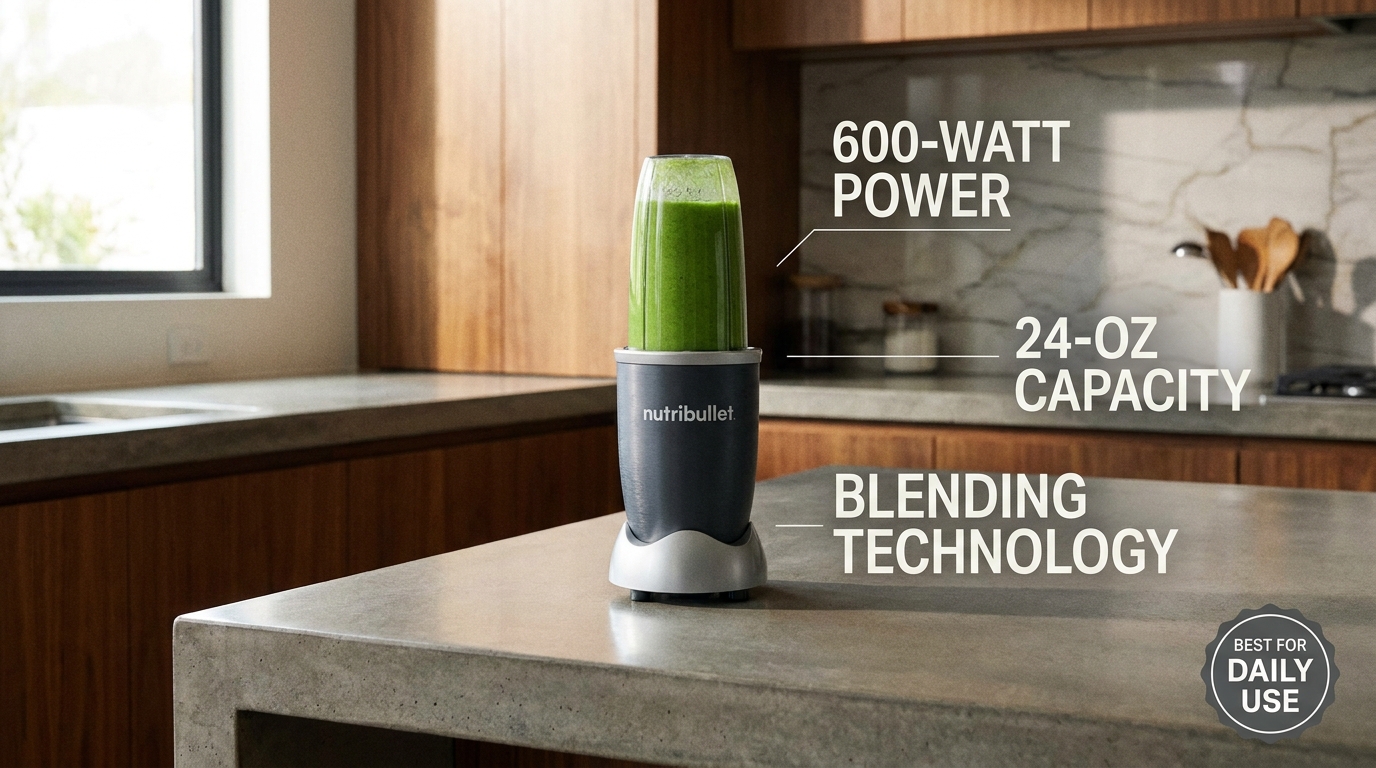
Personal blenders occupy a fairly specific niche within the broader small kitchen appliance category: smaller than a full-sized countertop blender, designed around single-serving portions, and generally built with simplicity and speed in mind rather than the wide range of settings found on larger models. The Nutribullet Personal Blender, model NBR-0601WM, fits squarely into this category, offering a 24-ounce blending cup, a 600-watt motor, and a design centered around shakes, smoothies, general food prep, and frozen ingredient blending, housed in a dark grey finish.
This article is meant to explain what a personal blender like this one generally does, how it tends to be used in daily routines, who’s likely to benefit most from owning one, and the practical considerations worth thinking through before deciding whether it fits your kitchen. As with any appliance, the intent here is to provide clear, balanced information rather than a sales pitch, so you can form your own judgment about whether it matches your needs.
Key Features
The Nutribullet Personal Blender is built around a fairly focused set of characteristics, each worth examining individually.
600-Watt Motor The blender’s motor is rated at 600 watts, which sits within a common range for personal blenders designed to handle everyday blending tasks such as fruits, vegetables, and ice, without the higher wattage typically associated with larger, more heavy-duty countertop blenders built for continuous or commercial-style use.
24-Ounce Blending Cup The included cup is sized for single-serving portions, generally suited to individual smoothies, shakes, or small-batch food prep, rather than the larger pitcher capacities found on standard countertop blenders intended for multiple servings at once.
Personal, Single-Serve Design Rather than blending into a separate pitcher and then pouring the contents into a cup, personal blenders like this one are generally designed so the blending cup itself becomes the drinking vessel, often by attaching a travel lid after blending, which reduces the number of dishes involved in preparing a single serving.
Frozen Ingredient Blending The appliance is designed to handle frozen ingredients, such as frozen fruit or ice, which is a common component of many smoothie recipes and requires a motor and blade design capable of breaking down harder, colder ingredients effectively.
General Food Prep Capability Beyond drinks, personal blenders of this type are often used for smaller food prep tasks, such as blending sauces, dips, or small batches of ingredients that don’t require the larger capacity of a standard blender or food processor.
Compact Footprint Given its smaller cup size and simpler design, this type of blender generally occupies less counter and storage space compared to a full-sized blender, which is a meaningful factor for smaller kitchens or those looking to minimize appliance clutter.
How It Can Be Used
Personal blenders like this one tend to be used for a fairly consistent set of everyday tasks, generally centered around individual portions and quick preparation.
Daily smoothies and shakes are probably the most common use case, with many people using a personal blender specifically to prepare a single-serving smoothie or protein shake as part of a morning routine or post-workout habit, without needing to blend a larger batch or use a full-sized blender for one portion.
Frozen fruit and ice-based drinks benefit from the blender’s ability to break down colder, harder ingredients, which is particularly relevant for smoothie recipes that rely on frozen fruit rather than fresh produce and ice cubes added separately.
Small-batch food prep is another practical use, including tasks like blending salad dressings, small sauce portions, or pureeing baby food, where the smaller cup size is actually an advantage rather than a limitation compared to a larger blender pitcher.
On-the-go beverage preparation is a common pattern with personal blenders generally, since the same cup used for blending can often be fitted with a travel lid, allowing someone to blend a drink and take it directly out the door without needing to transfer it to a separate container.
Meal replacement or supplement blending is another frequent use, particularly for individuals incorporating protein powders, greens powders, or other supplements into a daily shake or smoothie routine.
Quick cleanup blending sessions are also a practical pattern, since the compact single-cup design generally involves less cleanup than a full-sized blender pitcher, which can matter for people blending drinks frequently throughout the week and wanting to minimize dishwashing time.
Who It May Be Suitable For
Given its focus on single-serving portions and straightforward operation, this type of personal blender tends to appeal to a fairly specific set of users and situations.
Individuals who regularly prepare a single smoothie or shake as part of a daily routine, such as a morning smoothie or a post-workout protein shake, are generally well matched to a personal blender’s single-serving design and simplified cleanup process.
People with limited kitchen space may appreciate the smaller footprint of a personal blender compared to a full-sized countertop model, particularly in smaller apartments or kitchens where counter and storage space is limited.
Those looking for a more portable blending option may find the ability to blend directly into a to-go cup, often with an included travel lid, particularly convenient for busy mornings or bringing a drink along while heading out.
Households where only one or two people regularly use the blender for individual portions may find a personal blender better matched to their actual usage than a larger blender designed for multiple servings at once.
Anyone newer to blending routines, such as someone just starting to incorporate smoothies or shakes into their diet, may find a personal blender a lower-commitment, simpler starting point compared to investing in a larger, more feature-dense countertop blender.
On the other hand, larger households that regularly blend bigger batches, such as smoothies for multiple family members at once, or those who frequently need to blend larger quantities of soups, sauces, or other recipes, may find a personal blender’s capacity and motor power more limiting than what a full-sized blender would offer.
Important Things to Consider
There are several practical points worth thinking through before deciding whether a personal blender like this one fits your needs.
Motor power relative to ingredients. A 600-watt motor is generally suitable for everyday blending tasks like fruits, vegetables, and ice, but may be less effective for particularly hard or fibrous ingredients compared to higher-wattage blenders designed for more demanding blending tasks, such as crushing very hard ice consistently or processing tougher vegetables.
Capacity limitations for larger batches. A 24-ounce cup is generally intended for single servings, so this type of blender isn’t typically well suited to preparing larger batches for multiple people at once, which is an important distinction from full-sized countertop blenders with larger pitcher capacities.
Blade and cup maintenance. As with most blenders, the blade assembly and cup require regular cleaning after each use to prevent residue buildup, and it’s worth checking the specific care instructions for the model, since components may vary in terms of dishwasher compatibility versus requiring hand washing.
Limited settings compared to full-sized blenders. Personal blenders are generally designed around simplicity, often with a single blending function rather than the multiple speed settings, pulse functions, or pre-programmed cycles found on larger, more feature-dense countertop blenders, which is worth considering if you’re looking for more granular control over blending texture.
Ingredient loading and liquid ratios. Personal blenders generally perform best with a reasonable ratio of liquid to solid ingredients, and overloading the cup with too many solid or frozen ingredients relative to liquid can sometimes result in uneven blending or strain on the motor, so it’s worth following general blending guidelines for best results.
Not typically designed for hot liquids. Many personal blenders, including smaller single-serve models, aren’t designed to handle hot liquids safely due to pressure buildup concerns in a sealed cup, so it’s worth confirming specific guidance before attempting to blend anything heated.
Travel lid and seal maintenance. If the blending cup is used as a to-go container with a travel lid, it’s worth periodically checking the seal and lid components for wear, since these parts are important for preventing leaks during transport.
Comparison of General Categories
Rather than comparing this specific model to individual competing blender brands, it’s often more useful to compare personal blenders as a category to other common types of blending appliances.
Personal blenders versus full-sized countertop blenders. Full-sized blenders generally offer larger capacity, more powerful motors, and a wider range of settings, making them better suited to blending larger batches, tougher ingredients, or more varied recipes like soups and nut butters. Personal blenders trade that versatility for a smaller footprint, simpler operation, and reduced cleanup, which tends to suit single-serving, everyday blending tasks more effectively.
Personal blenders versus immersion blenders. Immersion, or stick, blenders are handheld tools generally used directly in a pot or bowl, well suited to blending soups or sauces in their existing container without transferring ingredients elsewhere. Personal blenders are self-contained units with their own cup, better suited to smoothies and shakes than to blending directly within a larger cooking vessel.
Personal blenders versus food processors. Food processors are generally designed for a broader range of food prep tasks, including chopping, slicing, and shredding, in addition to blending, and typically handle larger volumes and drier ingredients better than a personal blender. Personal blenders are more specifically optimized for liquid-based blending tasks like smoothies and shakes, rather than the wider variety of food prep functions a processor offers.
Compact personal blenders versus larger, higher-wattage personal blenders. Some personal blenders on the market offer higher wattage motors specifically marketed for more demanding blending tasks, such as consistently crushing very hard ice or handling tougher fibrous ingredients. A 600-watt model like this one is generally well suited to typical smoothie and shake ingredients, though those with more demanding blending needs may want to compare motor specifications more closely across different personal blender options.
Frequently Asked Questions
Can this type of blender crush ice effectively? Personal blenders with a 600-watt motor are generally capable of crushing ice as part of a smoothie or frozen drink recipe, particularly when combined with a reasonable amount of liquid, though consistently crushing large quantities of ice alone, without other ingredients, may be more demanding on the motor than blending a typical mixed smoothie.
Is it safe to blend hot liquids in a personal blender like this one? Many personal blenders, due to their sealed cup design, aren’t intended for hot liquids because of pressure buildup concerns, so it’s generally recommended to let hot ingredients cool before blending unless the specific product documentation states otherwise.
How much liquid should be added relative to solid ingredients for best results? While exact ratios vary by recipe, personal blenders generally perform best with a reasonable amount of liquid included alongside solid or frozen ingredients, since too little liquid relative to solids can make blending less effective and put additional strain on the motor.
Can the blending cup double as a drinking cup for on-the-go use? Many personal blenders, including single-serve models like this one, are designed so the same cup used for blending can be fitted with a separate travel lid, allowing it to be used directly as a drinking container without transferring the contents elsewhere.
Is this type of blender suitable for making larger batches for a family? A 24-ounce cup is generally intended for single servings, so preparing larger batches for multiple people typically requires blending multiple individual portions separately, rather than blending one large batch at once, unlike a full-sized blender with a larger pitcher capacity.
How is a personal blender different from a standard countertop blender in terms of care? Care generally follows similar principles, including regular cleaning of the blade assembly and cup after each use, though it’s worth checking specific manufacturer guidance, since dishwasher compatibility and hand-washing recommendations can vary between models and components.
Can this blender be used for tasks other than smoothies, like sauces or dips? Personal blenders are often used for small-batch food prep tasks beyond just smoothies, such as blending dressings, dips, or small sauce portions, though very thick or dry mixtures may require more liquid or careful loading to blend effectively given the appliance’s smaller size and motor power.
Conclusion
The Nutribullet Personal Blender reflects a fairly specific approach within the broader blender category: prioritizing single-serving convenience, a compact footprint, and simplified cleanup over the larger capacity and expanded settings found on full-sized countertop blenders. Its 600-watt motor and 24-ounce cup are generally well suited to everyday tasks like smoothies, shakes, and small-batch food prep, particularly for individuals or those preparing portions for just one or two people at a time.
Whether this type of personal blender fits your kitchen depends largely on how often you blend individual portions versus larger batches, how much counter and storage space you have available, and whether the convenience of blending directly into a to-go cup matters to your daily routine. Weighing these practical factors against your own habits is generally the most useful way to determine if it’s the right choice for your kitchen.