Introduction
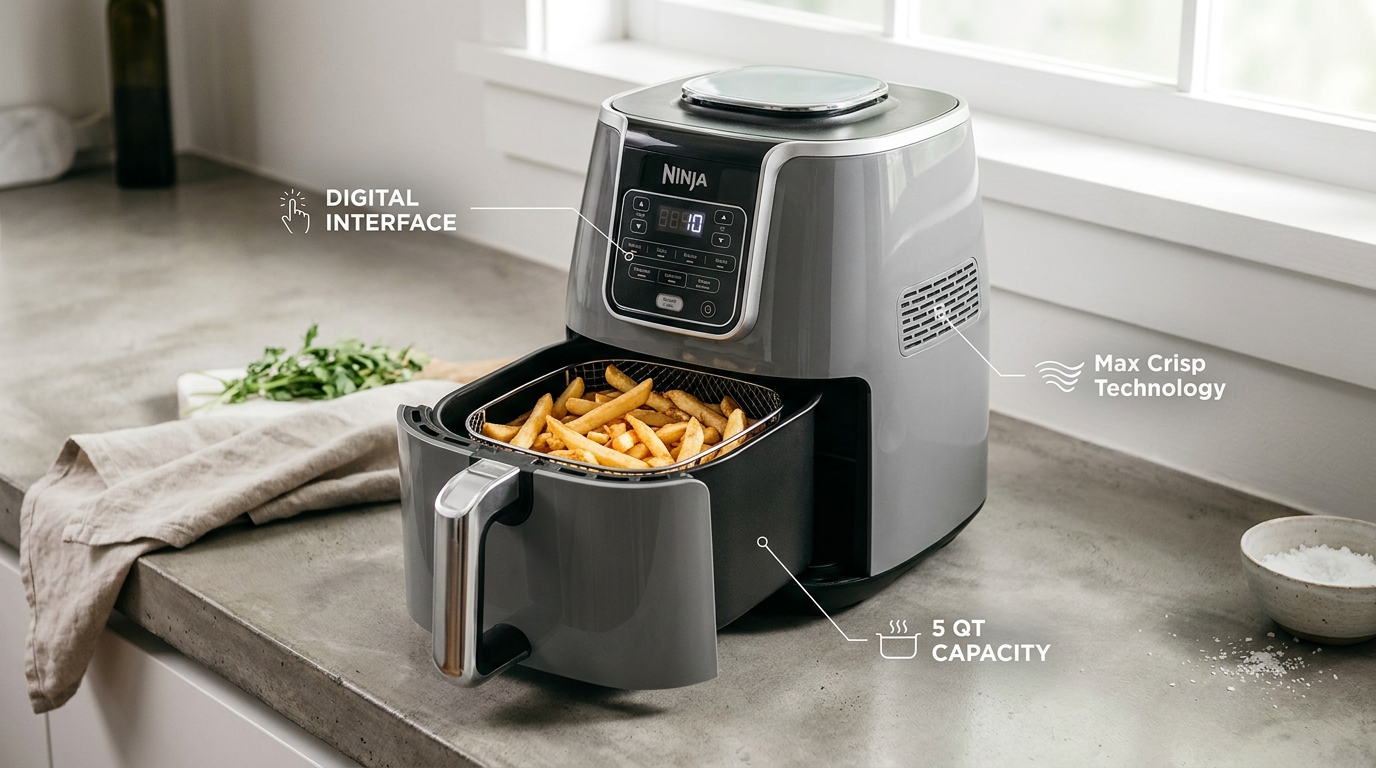
Air fryers have moved from a niche kitchen gadget to one of the more commonly owned countertop appliances over the past several years, largely because they offer a middle ground between the convenience of an oven and the texture typically associated with deep frying, without the same volume of oil. The Ninja Air Fryer AF141 is one example of this category, offering a 5-quart capacity, a stated ability to fit up to four pounds of fries at once, four distinct cooking functions, a maximum temperature of 400°F, 1750 watts of power, and a nonstick basket and crisper plate combination housed in a grey finish.
This article is intended to walk through what this kind of appliance generally does, how each function tends to be used in everyday cooking, who’s likely to find it genuinely useful, and the practical factors worth thinking about before deciding whether an air fryer like this one fits into your kitchen routine. Rather than presenting this as a sales pitch, the aim is to lay out balanced, informative details so you can make your own judgment.
Key Features
The Ninja Air Fryer AF141 combines several specific design elements and functions, each worth breaking down individually.
Air Crisp Technology At the core of the appliance is its air frying function, which circulates hot air rapidly around food to produce a crisped, browned exterior similar in some ways to deep frying, but using significantly less oil, often just a light coating or spray, rather than fully submerging food in fat.
5-Quart Capacity The unit’s capacity is specifically sized to accommodate a reasonably sized batch of food in a single cooking session, with the manufacturer citing the ability to fit up to four pounds of fries at once, which gives a general sense of the appliance’s practical volume for family-sized portions or moderate batch cooking.
Four Cooking Functions Beyond air frying, the appliance includes roast, reheat, and dehydrate functions, each using a slightly different combination of temperature and airflow suited to its specific purpose. Roasting is generally aimed at foods that benefit from more even, oven-style heat, reheating is designed to restore texture to leftovers without drying them out excessively, and dehydrating uses lower, sustained heat over a longer period to remove moisture from foods like fruit or vegetables for snacks such as dried fruit or vegetable chips.
400°F Maximum Temperature The appliance is capable of reaching temperatures up to 400 degrees Fahrenheit, which sits within the general range associated with achieving a crisped, browned texture on foods like fries, chicken wings, or roasted vegetables.
1750 Watts of Power This wattage figure reflects the appliance’s overall power draw and is generally associated with how quickly it can heat up and maintain temperature during cooking, which can influence overall cook times compared to lower-wattage models.
Nonstick Basket and Crisper Plate The included basket and separate crisper plate are designed with a nonstick coating, intended to make food easier to remove after cooking and simplify cleanup, while the crisper plate specifically allows hot air to circulate underneath food for more even cooking and browning on all sides.
How It Can Be Used
Air fryers with this kind of function range tend to get used across a fairly broad set of everyday cooking tasks, extending well beyond the “fries and chicken wings” reputation the category is often associated with.
Everyday side dishes are a common use, particularly for vegetables like broccoli, Brussels sprouts, or sliced potatoes, which many people find develop a satisfying crisped texture using the air crisp function with just a light coating of oil.
Proteins like chicken, fish, and other cuts of meat are frequently prepared using either the air crisp or roast function, often producing a browned exterior while keeping the inside relatively moist, in less time than a conventional oven might require for a similar result.
Reheating leftovers is a specific and fairly popular use case, since the reheat function is generally designed to restore some of the original texture to foods like pizza, fried items, or roasted dishes that tend to turn soggy when reheated in a microwave.
Roasting vegetables or smaller cuts of meat benefits from the more even, oven-style heat associated with the roast function, which some users find preferable to the more concentrated, direct airflow of the air crisp setting for certain dishes.
Dehydrating fruits, vegetables, or herbs is a less commonly used but genuinely practical function for households interested in preparing snacks like dried apple slices, vegetable chips, or herbs for storage, using the appliance’s ability to maintain a low, steady temperature over an extended period.
Reduced-oil cooking for typically fried foods is one of the more frequently cited motivations for using an air fryer generally, since foods like frozen fries, chicken tenders, or breaded items can often be prepared with a texture reasonably close to deep frying while using significantly less oil.
Smaller batch cooking without preheating a full oven is another practical use, particularly for smaller households or situations where heating an entire oven for a modest portion of food feels excessive or takes longer than necessary.
Who It May Be Suitable For
Given its function range and moderate capacity, this type of air fryer tends to appeal to a fairly broad set of households, though certain situations make it especially relevant.
Households looking to reduce oil usage in everyday cooking, particularly for foods traditionally associated with frying, may find the air crisp function a practical way to achieve a similar texture with meaningfully less oil.
Smaller to medium-sized households are generally well matched to a 5-quart capacity, which offers enough room for family-sized portions without requiring the larger capacities aimed at bigger batch cooking.
People who frequently reheat leftovers may specifically value having a dedicated reheat function, since it’s designed to avoid some of the sogginess commonly associated with microwave reheating.
Those interested in a faster alternative to preheating a full oven for smaller meals or side dishes may appreciate the appliance’s typically shorter preheat and cook times compared to a conventional oven.
Home cooks interested in dehydrating snacks at home, such as dried fruit or vegetable chips, may find the dedicated dehydrate function a useful addition without needing a separate, single-purpose dehydrator appliance.
Those with limited kitchen space who want a versatile appliance covering several cooking styles in one unit may appreciate consolidating air frying, roasting, reheating, and dehydrating functions into a single footprint rather than multiple separate appliances.
On the other hand, very large households doing extensive batch cooking, or those who already own multiple overlapping appliances such as a convection oven and a dehydrator, may find a 5-quart air fryer offers less added value relative to their existing setup and cooking volume needs.
Important Things to Consider
There are several practical points worth thinking through before deciding whether this type of air fryer is right for your kitchen.
Capacity limitations for larger households. While a 5-quart capacity and the ability to fit up to four pounds of fries is generally suitable for small to medium households, larger families or those regularly cooking for more people may need to prepare food in multiple batches, which affects total cooking time for larger meals.
Counter space requirements. Air fryers of this size take up a reasonable amount of counter space, and it’s worth confirming the unit’s dimensions against your available kitchen space before purchasing, particularly if you plan to keep it out permanently rather than storing it between uses.
Learning proper food arrangement for even cooking. Air fryers generally cook most evenly when food is arranged in a single layer with some space between pieces, rather than tightly packed, which may require some adjustment for those used to more forgiving oven cooking, where crowding is less of a concern.
Cleaning the basket and crisper plate. While the nonstick coating is designed to simplify cleanup, regular cleaning after each use is still generally recommended to prevent residue buildup, particularly from oil or breading, which can affect performance and smoke production during subsequent uses if left uncleaned.
Adjusting recipes from conventional ovens. Recipes originally written for conventional ovens often need some adjustment in both temperature and cook time to work well in an air fryer, since the more direct, rapid air circulation tends to cook food faster than a standard oven at the same listed temperature.
Noise level during operation. Air fryers generally rely on an internal fan to circulate hot air, which produces a noticeable level of operational noise, something to factor in if you’re particularly sensitive to appliance noise or plan to use it in a shared living space.
Power consumption considerations. At 1750 watts, this appliance draws a meaningful amount of power during operation, which is worth keeping in mind alongside other kitchen appliances being used simultaneously, particularly in kitchens with limited circuit capacity.
Comparison of General Categories
Rather than comparing this specific model against other individual air fryer brands, it’s often more useful to compare air fryers as a broader category to other common cooking methods and appliances.
Air fryers versus conventional ovens. Conventional ovens generally offer larger cooking capacity and are well suited to bigger meals or multiple dishes cooked simultaneously, but typically take longer to preheat and cook food compared to the more direct, rapid air circulation used in air fryers. Air fryers tend to be favored for smaller portions or when faster cooking times and a crisper texture are priorities.
Air fryers versus deep frying. Deep frying generally produces a very specific texture and flavor profile that some cooks and foods are particularly suited to, but it requires a significant volume of oil, generates more mess, and involves food safety considerations around hot oil handling. Air frying offers a texture reasonably comparable to deep frying for many foods while using substantially less oil, though the results aren’t always identical, particularly for foods that rely heavily on oil for their traditional texture.
Air fryers versus dedicated dehydrators. A dedicated, single-purpose dehydrator is often better suited to larger-batch or more frequent dehydrating tasks, since it’s specifically designed around that single function with more surface area typically available. An air fryer with a built-in dehydrate function offers a more space-efficient, occasional-use alternative for households that don’t dehydrate food often enough to justify a separate appliance.
Air fryers versus microwave reheating. Microwaves are generally faster for reheating but often leave previously crispy foods soggy, since they primarily heat through moisture rather than circulating hot air. Air fryers with a dedicated reheat function tend to take a bit longer but are often better at restoring some of the original texture to foods like fried items, pizza, or roasted dishes.
Frequently Asked Questions
Does an air fryer actually fry food, or is it more like a small convection oven? Functionally, air fryers operate similarly to a compact convection oven, using a fan to rapidly circulate hot air around food. The term “air frying” refers to the resulting texture, which is intended to resemble traditional frying, rather than the food actually being submerged in oil.
Is very little or no oil required when using the air crisp function? Many foods can be prepared with just a light coating or spray of oil, or in some cases with none at all depending on the food’s natural fat content, though a small amount of oil is often recommended to help achieve a more evenly browned, crisped texture.
How does the dehydrate function differ from a dedicated food dehydrator? Both generally rely on low, sustained heat over an extended period to remove moisture from food, though a dedicated dehydrator often has more surface area and may be designed specifically to optimize airflow for larger dehydrating batches, whereas an air fryer’s dehydrate function is typically better suited to smaller quantities.
Can frozen foods be cooked directly in this type of air fryer without thawing first? Many frozen foods, such as fries or breaded items, are commonly cooked directly from frozen in an air fryer, often with adjusted cook times compared to fresh or thawed versions of the same food, though specific guidance can vary by product.
Why is it recommended to avoid overcrowding the basket? Air fryers rely on hot air circulating around food from multiple directions to achieve even cooking and browning, so overcrowding the basket can block airflow and result in uneven cooking or a less crisped texture, particularly on pieces that are touching or stacked.
Is the nonstick basket safe to clean in a dishwasher? Many nonstick air fryer baskets and crisper plates are generally considered dishwasher safe, though it’s worth checking the specific care instructions provided with the appliance, since guidance can vary and hand washing is sometimes recommended to help preserve the nonstick coating over time.
How does cook time in an air fryer compare to a conventional oven at the same temperature? Air fryers generally cook food faster than a conventional oven set to the same temperature, due to the more direct and rapid air circulation, so recipes often need to be adjusted with either a shorter cook time or a slightly lower temperature when converting from oven instructions.
Conclusion
The Ninja Air Fryer AF141 reflects the broader appeal of the air fryer category: a relatively compact appliance capable of producing a crisped, browned texture on a wide range of foods using significantly less oil than traditional frying, while also offering additional functions like roasting, reheating, and dehydrating within the same unit. Its 5-quart capacity and four cooking functions position it as a fairly versatile option for everyday cooking tasks, from side dishes and proteins to reheated leftovers and dehydrated snacks.
Whether this type of air fryer fits your kitchen depends largely on your typical household size, how much you cook foods traditionally associated with frying, and how much value you place on consolidating several cooking functions into a single appliance. Weighing these practical factors against your own cooking habits and available kitchen space is generally the most useful way to determine if it’s a good match for your routine.